
Will Milwaukee replace broken tools stands as a hot topic among DIY fans, contractors, and home workshop owners. Tool buyers want more than raw power; real value also includes support after the sale.
Milwaukee built a strong reputation for tough designs and jobsite-ready performance, yet warranty and replacement policies shape the full experience. Broken tools waste time, slow projects, and drain money, so clear answers matter. Milwaukee claims to back its products, but many users still wonder how the process works in real life.
Stories from real customers often paint a clearer picture than fine print. Repair, replacement, turnaround time, and proof of purchase all play a role in the final outcome. Brand trust grows only when service matches promises.
This guide breaks down what Milwaukee actually offers, how the claim process works, and what tool owners should expect. Smart knowledge helps every buyer protect tools, budget, and peace of mind.
Will Milwaukee Replace Broken Tools?
Milwaukee gives a limited warranty on most tools. That warranty covers defects from the factory. A defect means a problem that starts inside the tool. Bad wiring, weak motors, or faulty boards fall in this group. Milwaukee will fix or replace a tool that fails for these reasons.
Damage from accidents does not count. Drops, water, heat, or wrong use end warranty rights.
Milwaukee Warranty Time Length?
Each tool has a set time.
Cordless and Corded Power Tools
Most cordless and corded tools come with five years of warranty. Some models have three years. A few special tools have one year. The box or Milwaukee website lists the exact term.
The clock starts on the purchase date.
Batteries and Chargers
Batteries have two or three years in most cases. High output packs often get longer cover. Chargers usually come with five years.
Battery life drops over time. Fast wear from hard use does not mean defect.
Hand Tools
Many Milwaukee hand tools come with lifetime warranty. That includes pliers, wrenches, tape measures, and screwdrivers.
Normal wear still ends coverage.
What Counts as a Defect?
A defect means a flaw from the factory.
Examples include:
-
Drill that stops after light use
-
Saw that cuts off without reason
-
Charger that never turns on
-
Battery that dies in a few weeks
These problems point to bad parts inside the tool.
Milwaukee tests every tool after arrival. The test shows if a defect exists.
What Milwaukee Will Repair or Replace?
Milwaukee can repair a tool or replace it. A small part problem leads to repair. A major failure often leads to a new tool.
Examples:
-
Bad motor
-
Broken trigger
-
Loose wiring
-
Faulty control board
All parts and labor stay free during warranty.
What Milwaukee Will Refuse?
Some damage ends warranty.
Examples:
-
Tool falls from height
-
Tool gets wet
-
Tool burns
-
Tool shows cracks from impact
-
Tool opened by user
These signs point to misuse. Milwaukee then sends a paid repair quote.
How Milwaukee Checks Your Tool?
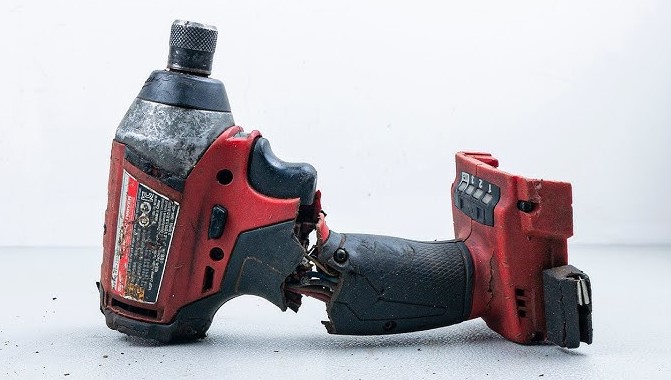
Every tool goes through inspection.
Technicians look for:
-
Burn marks
-
Rust
-
Cracks
-
Missing screws
-
Signs of tamper
The serial number shows tool age. A tool older than warranty time does not get free service.
Step-by-Step Warranty Claim
Step 1: Find Model and Serial Number
The label sits on the tool. That number links to its warranty record.
Step 2: Collect Proof of Purchase
A store receipt works best. An online order page also works.
Step 3: Use Milwaukee eService
Milwaukee runs an online service page. Users enter tool data and problem details. A free shipping label prints.
Step 4: Pack the Tool
Remove the battery. Send only the tool unless Milwaukee asks for more.
Step 5: Ship the Tool
Drop the box at the carrier shown on the label.
Step 6: Wait for Inspection
Milwaukee checks the tool. Status updates show online.
Step 7: Receive Result
A free repair, a new tool, or a paid repair offer arrives.
Repair Time
Most repairs take one to three weeks. Busy seasons can slow the process.
Shipping time adds a few days.
Store Return vs Warranty
Stores handle short return windows. Milwaukee handles long warranty claims. Stores do not repair tools.
A broken tool after store return time must go to Milwaukee.
Tips to Protect Warranty
-
Keep the receipt
-
Register tools on Milwaukee site
-
Store tools in dry areas
-
Use the right charger
-
Avoid drops
Small care saves large cost.
Common Problems Users Face
No Receipt
Milwaukee can still check the serial number. The tool age then decides.
Lost Serial Label
A missing label makes warranty hard. Milwaukee needs that number.
Tool Shows Impact Marks
Scratches alone do not void warranty. Cracks or dents do.
FAQs
Does Milwaukee replace broken tools without a receipt?
Milwaukee can use the serial number. A receipt still helps prove date.
Does Milwaukee replace tools used on job sites?
Yes. Job use does not cancel warranty.
Does Milwaukee replace tools that stop after heavy use?
Heavy use does not end warranty unless damage shows misuse.
Does Milwaukee replace batteries that lose power fast?
Yes, when a defect causes the loss inside warranty time.
Does Milwaukee replace tools older than warranty?
No. Old tools need paid repair.
Conclusion
Milwaukee will replace broken tools that fail from defects. Drops and water damage do not qualify. A serial number and receipt make the process easy. Tool owners who understand the rules save time and money. Knowledge protects every Milwaukee tool.