
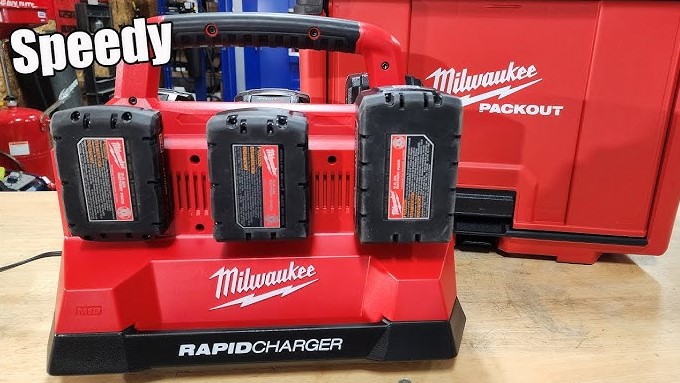
Milwaukee chargers power some of the most reliable tools for professionals and DIY enthusiasts alike. Understanding how much energy they consume helps in planning electricity usage and managing costs.
Wattage indicates how much power a charger draws from an outlet, and it can vary depending on the model and battery type. Some chargers operate efficiently with minimal energy, while others pull more watts to charge larger batteries faster.
Knowing the exact wattage can also prevent overloading circuits, ensuring safety during work. Comparing different Milwaukee chargers reveals differences in energy consumption and charging speed, helping users pick the right charger for their needs.
Energy-efficient chargers not only reduce electricity bills but also extend battery life by maintaining optimal charging conditions. This guide breaks down the typical wattage range for Milwaukee chargers and explains factors that affect power usage, giving readers a clear understanding of what to expect.
How Many Watts Does a Milwaukee Charger Use?
Power tools need batteries. Milwaukee chargers keep these batteries ready.
Knowing how many watts a Milwaukee charger uses helps save electricity, prevent overheating, and plan work. Watts tell how much electricity a device consumes.
This guide explains everything in simple words.
What Is a Watt?
A watt is a measure of power. It tells how much energy a device uses per second. Higher watts mean more energy use.
For chargers, watt numbers show how fast they pull electricity from the wall to charge a battery.
Formula to find watts:
Watts = Volts × Amps
-
Volts (V) show the pressure of electricity.
-
Amps (A) show how much electricity flows.
-
Watts (W) show total power.
Example:
A charger rated at 18 volts and 2 amps uses:
18 × 2 = 36 watts
Types of Milwaukee Chargers
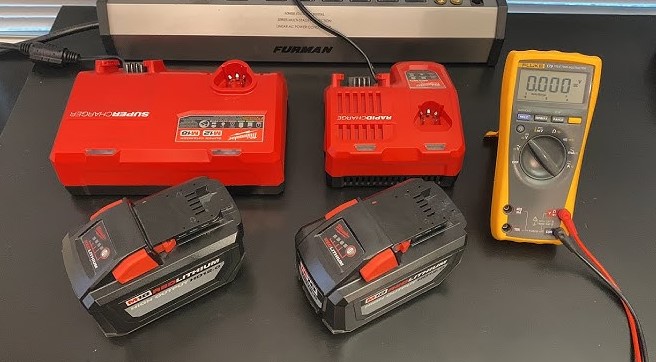
Milwaukee chargers vary by battery size and speed. Each type uses different watts.
1. M12 Chargers
-
For 12V batteries (M12 line).
-
Standard charger: 30–35 watts.
-
Fast charger: 40–45 watts.
-
Charges small batteries like 1.5Ah, 2Ah, 3Ah.
2. M18 Chargers
-
For 18V batteries (M18 line).
-
Standard charger: 50–60 watts.
-
Fast charger: 70–80 watts.
-
Charges larger batteries like 4Ah, 5Ah, and even 9Ah.
3. Multi-Bay Chargers
-
Can charge 2 or more batteries at once.
-
Watt use roughly doubles.
-
Example: M18 dual charger may use 120–150 watts.
Factors That Affect Watt Use
Battery Size
Bigger batteries hold more energy.
-
2Ah battery (M12) draws ~30 watts on standard charger.
-
5Ah battery (M18) can draw 70–80 watts.
-
9Ah battery (M18) may reach 90–100 watts.
Charger Speed
-
Standard chargers deliver less current slowly.
-
Fast chargers push higher amps. This increases watts.
-
Fast chargers finish charging quicker but use more electricity at once.
Charger Age and Condition
-
Older chargers may become less efficient.
-
Dust or dirt can cause slight energy loss.
Charging Method
-
Charging a fully drained battery uses more power initially.
-
Once battery reaches 80–90%, watt use drops.
Energy Use Over Time
Electricity cost depends on how long you charge.
Example:
-
M18 fast charger uses 75 watts.
-
Charge time for 5Ah battery = 1 hour.
-
Energy used = 75 W × 1 hr = 75 Wh = 0.075 kWh
-
At $0.12 per kWh, cost = 0.075 × 0.12 ≈ $0.009
Even fast chargers cost very little per charge.
Safety Tips While Charging
-
Always use charger with correct battery voltage.
-
Do not leave charger plugged in overnight.
-
Keep charger away from water and heat.
-
Use on flat, hard surfaces. Avoid soft surfaces like beds.
-
Do not stack batteries while charging.
Comparison of Popular Milwaukee Chargers and Watt Use
| Charger Model | Battery Type | Voltage | Amps | Approx Watts | Charging Time |
|---|---|---|---|---|---|
| M12 Standard | 1.5Ah–3Ah | 12V | 2.5A | 30 W | 60–90 min |
| M12 Fast | 1.5Ah–3Ah | 12V | 3.5A | 42 W | 30–50 min |
| M18 Standard | 2Ah–5Ah | 18V | 3A | 54 W | 60–120 min |
| M18 Fast | 2Ah–9Ah | 18V | 4A | 72 W | 30–60 min |
| M18 Dual | 2Ah–5Ah | 18V | 6A | 108 W | 60–120 min |
This table helps understand energy use clearly.
FAQs About Milwaukee Charger Watt Use
1. Can watt use vary between same chargers?
Yes. Watt use depends on battery size, charge level, and charger condition.
2. Do chargers use electricity after battery is full?
Some draw a small amount (trickle). Modern chargers reduce this to almost zero.
3. Can using multiple chargers increase energy bills a lot?
Even running two fast chargers all day costs very little, around $0.20–$0.50 per day.
4. Can I charge a battery from 50%?
Yes. Charging half-full batteries uses less energy than fully drained ones.
5. Does using a fast charger reduce battery life?
No. Milwaukee chargers are designed to safely manage battery temperature and voltage.
Conclusion
Milwaukee chargers use 30–100 watts depending on type and battery size. Fast chargers and larger batteries draw more power. Energy use is small and cost per charge is very low. Checking watt ratings helps plan electricity use, protect batteries, and work safely.