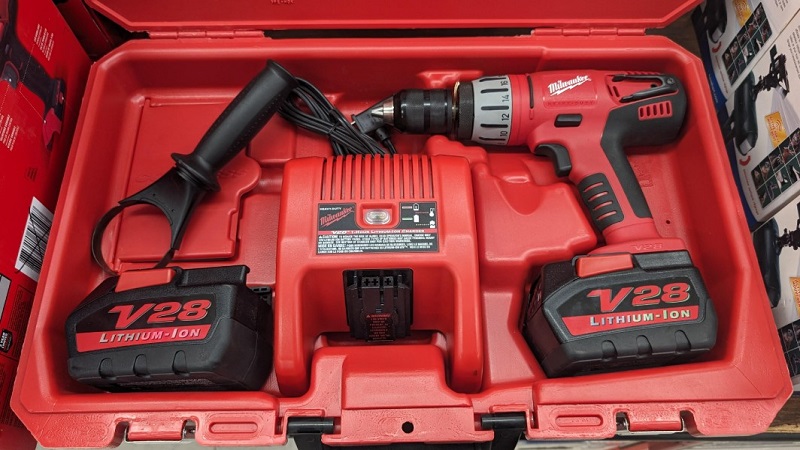
Milwaukee built a strong reputation with its M28 line. Contractors and DIY users trusted these 28-volt tools for serious power and long runtime. Many people now ask a simple question: is Milwaukee M28 discontinued? Confusion grows because stores rarely stock new M28 tools.
Online listings often show limited inventory or refurbished units. Newer battery platforms also dominate shelves and job sites. Milwaukee shifted focus toward advanced lithium-ion systems like the M18 line.
These newer platforms offer lighter batteries, better efficiency, and wider tool selection. As a result, M28 tools no longer appear in most major retail catalogs. Some replacement batteries and parts still circulate through select sellers.
Loyal users continue to rely on existing tools because of their durability and torque. Clear facts help buyers decide whether to repair, replace, or upgrade. This guide breaks down the current status of the Milwaukee M28 platform and what it means for tool owners today.
Is Milwaukee M28 Discontinued?
Yes. Milwaukee Tool stopped active production of the M28 cordless system. The company no longer develops new M28 tools. Most large retailers no longer stock them.
This change did not happen overnight. It came after big improvements in battery technology. Newer 18V systems started to match or beat old 28V performance. Weight dropped. Efficiency improved. Users moved to newer platforms.
This article explains the full story in clear detail.
What Was the Milwaukee M28 System?
A 28-Volt Lithium-Ion Platform
Milwaukee launched the M28 line in the mid-2000s. At that time, cordless tools lacked strong power. Many contractors still depended on corded tools for heavy jobs.
The M28 system used 28-volt lithium-ion batteries. That voltage level sounded impressive. It offered more power than common 18V tools at that time. The goal was simple. Deliver corded-level performance without a cord.
Battery Size and Design
M28 batteries used larger battery cells. The pack size was bigger than typical 18V batteries. Higher voltage came from more battery cells connected in series. More cells meant:
-
Larger battery pack
-
Heavier tool weight
-
Higher cost
Each battery pack usually weighed over 3 pounds. That added noticeable weight to every tool.
Why Was M28 Popular at First?
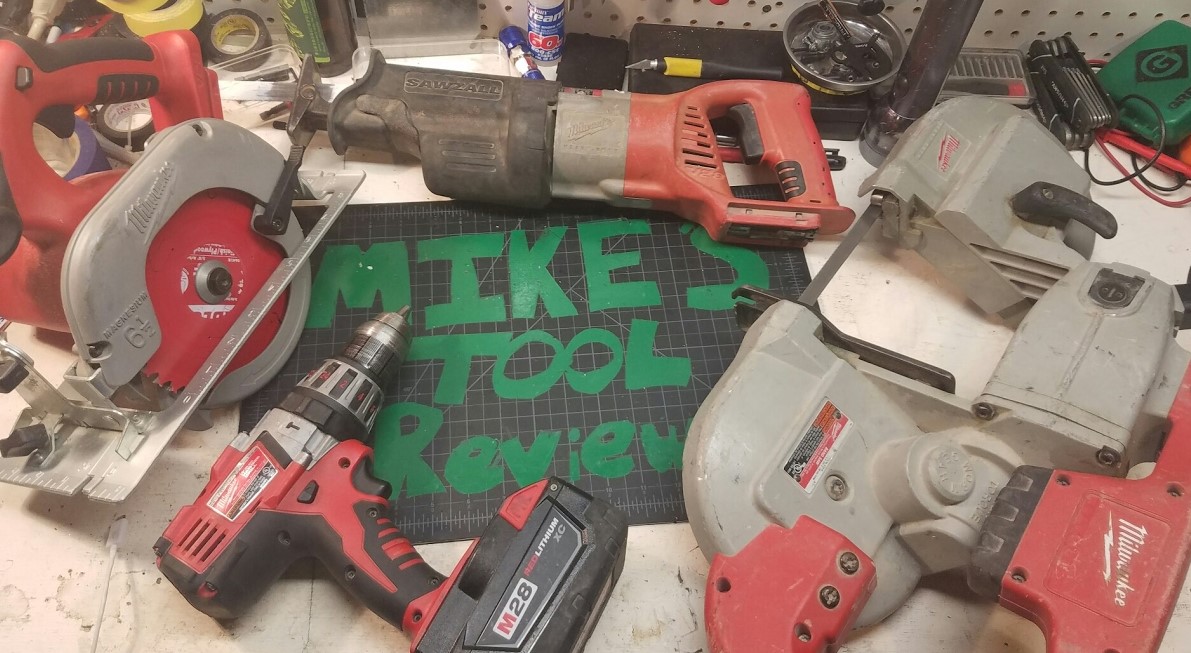
Strong Power Output
Early 18V tools struggled with high torque tasks. M28 tools handled:
-
Large hole saw drilling
-
Thick lag bolts
-
Heavy demolition cutting
-
Concrete drilling
Contractors liked the extra torque. They felt confident using M28 for demanding work.
Longer Runtime Compared to Old 18V
Early lithium-ion batteries gave better runtime than older NiCad batteries. M28 stood out at launch because runtime improved. Users saw fewer slowdowns during long jobs.
Why Did Milwaukee Discontinue M28?
Battery Cell Technology Changed
Battery technology improved fast between 2010 and 2016. Manufacturers began using higher density lithium-ion cells. Higher density means more energy in a smaller space.
An 18V battery with modern cells can now produce similar watt output to older 28V packs. Power equals voltage multiplied by current.
Engineers improved current output through better cell chemistry and electronics. That reduced the need for 28 volts.
Rise of the M18 Platform
Milwaukee M18 became the company’s main focus. Milwaukee expanded this system quickly.
The M18 system added:
-
Brushless motors
-
Advanced electronic control boards
-
High Output battery packs
-
Larger amp-hour options
Modern M18 High Output batteries can reach 8.0Ah, 12.0Ah, or higher. These packs provide strong sustained power while keeping weight lower than M28.
Weight and Ergonomics
Weight matters in real job sites. Heavy tools cause fatigue. Fatigue reduces speed and accuracy. Long overhead drilling becomes harder with heavier packs.
M28 tools often weighed 1 to 2 pounds more than similar M18 tools. That difference feels small on paper. It feels big after 8 hours of work.
Production Efficiency
Maintaining multiple battery platforms increases:
-
Manufacturing costs
-
Inventory complexity
-
Warranty support issues
Companies often reduce older systems to focus on one main ecosystem. Milwaukee chose M18 as its primary professional line.
How Powerful Was M28 Compared to M18?
Raw Voltage vs Real Output
M28 delivered 28 volts nominal. M18 delivers 18 volts nominal. Voltage alone does not tell the full story. Modern brushless motors use energy more efficiently.
They waste less power as heat. Advanced electronics manage power delivery better. Many modern M18 Fuel tools now match or exceed older M28 torque ratings.
Torque Comparison Example
Older M28 hammer drills delivered high torque for their time. Modern M18 Fuel hammer drills now exceed 1,200 in-lbs of torque. Improved engineering closed the performance gap.
Is Milwaukee M28 Fully Discontinued?
Milwaukee does not promote or expand the M28 line anymore.
Most major retailers no longer carry:
-
New M28 tools
-
New M28 combo kits
Some specialty sellers still offer leftover inventory. Used markets remain active. Production remains limited or fully stopped depending on region. For practical purposes, the line is discontinued.
What Problems Do M28 Owners Face Today?
Battery Availability
Battery packs remain the biggest issue. Lithium-ion batteries degrade over time. Chemical aging reduces capacity. Even unused batteries lose strength after several years.
Replacement packs can be:
-
Hard to find
-
Expensive
-
Old stock
That increases long-term risk.
Repair Parts
Spare parts may still exist. Availability shrinks each year. Service centers focus more on M18 tools.
Should You Upgrade From M28?
Reasons to Keep M28
Keep using M28 if:
-
Your batteries still hold charge
-
Tools perform well
-
You do not need new additions
Many M28 tools remain durable and strong.
Reasons to Switch
Upgrade makes sense if:
-
You need new batteries
-
You want lighter tools
-
You plan to expand your tool collection
M18 offers a large ecosystem. Hundreds of tools run on the same battery. One battery platform simplifies work.
Technical Breakdown: M28 vs M18
Battery Configuration
M28 battery packs use more cells in series to reach 28 volts. M18 packs use fewer cells in series but may include more parallel cells for higher current output.
Parallel cell design increases amperage capacity without raising voltage. This design improves balance between power and weight.
Energy Density
Energy density measures how much energy a battery holds per weight. Modern lithium-ion cells store more energy per pound than older cells used in early M28 packs. That explains why smaller batteries now deliver similar runtime.
Market Trends That Influenced the Decision
The power tool industry shifted toward:
-
Compact design
-
Multi-tool ecosystems
-
Cross-platform compatibility
Brands compete on tool variety and battery flexibility. Milwaukee expanded M18 into plumbing, electrical, HVAC, automotive, and landscaping.
M28 did not grow at the same rate. Customer demand moved toward lighter systems.
Long-Term Outlook for M28
Expect these trends:
-
Reduced battery supply
-
Rising used tool prices
-
Lower resale value over time
-
Gradual phase-out from service centers
Tools may continue working for years. Battery support remains the key concern.
FAQs
Is Milwaukee M28 officially discontinued?
Yes. Milwaukee stopped expanding and actively producing the M28 system.
Why did Milwaukee stop making M28?
Improved battery technology made 18V systems powerful enough. M18 became lighter and more efficient.
Can M28 batteries work with M18 tools?
No. The platforms are not compatible.
Are M28 tools still powerful?
Yes. Many still perform strongly. Battery age affects performance most.
Is upgrading to M18 worth it?
Upgrade helps with weight reduction, battery access, and future tool expansion.
Conclusion
Milwaukee M28 discontinued status reflects changes in technology and market demand. The system once delivered strong cordless power during a time when 18V tools struggled.
Battery improvements allowed smaller platforms to match that performance. Milwaukee focused on the M18 ecosystem to reduce weight, improve efficiency, and expand tool variety. M28 tools still work well for many owners, but long-term battery availability continues to shrink.