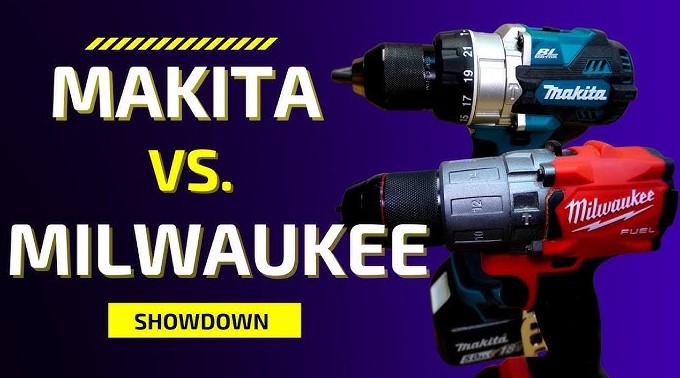
Power tools shape every workshop and job site, and professionals constantly debate which brand delivers superior performance. Makita and Milwaukee stand out as two industry giants, each offering a wide range of drills, saws, impact drivers, and more.
Makita earns praise for its lightweight designs, smooth handling, and long-lasting battery life, making extended projects easier to manage. Milwaukee attracts loyal users with its rugged construction, high torque, and innovative battery technology that keeps heavy-duty tools running longer.
Understanding the subtle differences between these brands can save time, money, and frustration. This comparison dives into performance, durability, ease of use, and price, offering practical insights for hobbyists and professionals alike.
By exploring real-world applications and unique features, readers gain a clear perspective on which tools best suit their needs. Discover which brand delivers more power, efficiency, and value for every project.
Is Makita Better than Milwaukee?
Makita and Milwaukee are two of the most trusted power tool brands in the world. Both make drills, impact drivers, saws, grinders, and other tools used by professionals and DIYers.
People often ask: which brand is better? The answer is not simple because both brands are strong.
Some tools are better in power, others in comfort or battery life. This guide explains their differences in detail with numbers, features, and practical comparisons.
Brand History and Focus
Makita
Makita is a Japanese brand founded in 1915. They started with electric motors and gradually expanded to power tools. Makita focuses on balance power, durability, and ease of use.
Most Makita tools are designed to run cooler during long use. Their main battery system is 18V LXT, which powers over 275 tools. The 40V XGT series is newer and built for heavy-duty jobs.
Milwaukee
Milwaukee started in the USA in 1924. Their focus has always been professional and heavy-duty tools. Milwaukee tools are designed for construction sites, plumbing, electrical, and industrial jobs.
Their main battery systems are M18 (18V) and M12 (12V). Milwaukee emphasizes raw power, long battery life under heavy load, and tools for demanding conditions.
Battery Systems and Runtime
Makita Batteries
-
18V LXT: Supports over 275 tools. Battery sizes range from 2.0Ah to 6.0Ah.
-
40V XGT: For high-power tools like metal cutters and large drills. Battery sizes range from 2.5Ah to 5.0Ah.
Battery Life:
-
18V LXT 5.0Ah drill runs around 1,000 screws per charge (with 3-inch screws in softwood).
-
40V XGT batteries handle large impact drivers for up to 500 screws in hard wood per charge.
Milwaukee Batteries
-
M18: Works with over 250 tools. Battery sizes range from 2.0Ah to 12.0Ah.
-
M12: Compact 12V line with over 125 tools, designed for light jobs.
Battery Life:
-
M18 9.0Ah packs run heavy impact drivers for up to 1,200 screws in softwood or 600 screws in hardwood.
-
M18 12.0Ah pack can power large saws or grinders for 1–2 hours of continuous cutting.
Observation: Milwaukee batteries have higher capacity options. Makita focuses on balance and lighter weight.
Power and Performance
Torque and Speed
Cordless Drills:
-
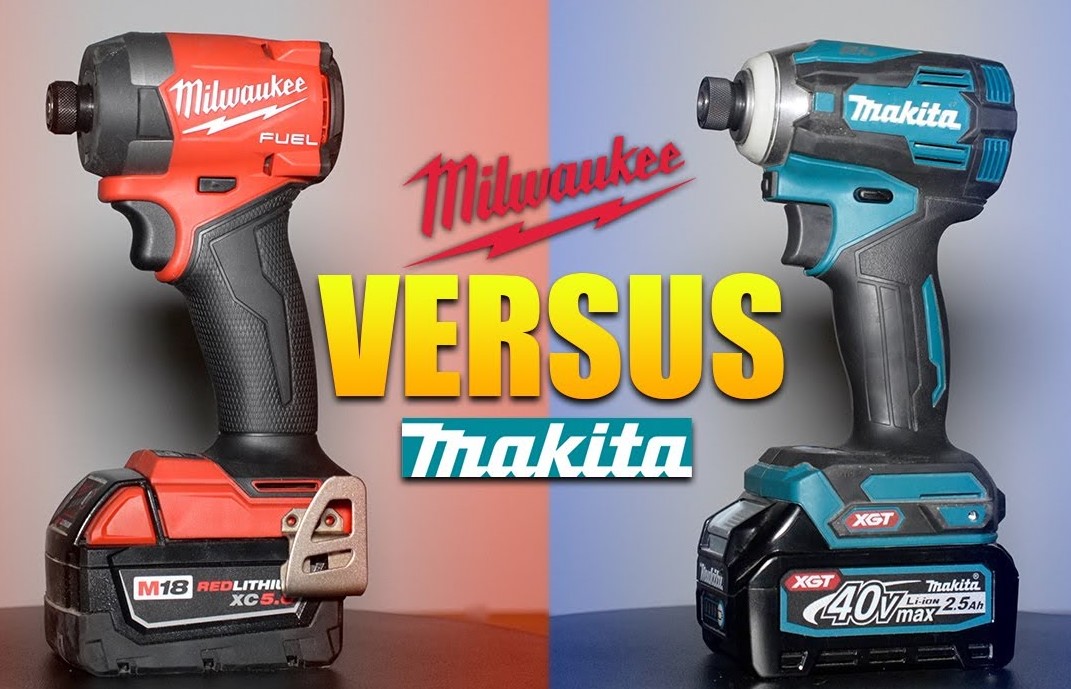
Milwaukee M18 brushless drill torque: 600–650 in-lbs.
-
Makita 18V brushless drill torque: 500–530 in-lbs.
Impact Drivers:
-
Milwaukee top speed: 0–3,900 RPM, torque up to 1,800 in-lbs.
-
Makita top speed: 0–3,200 RPM, torque up to 1,500 in-lbs.
Observation: Milwaukee tools produce higher peak torque and speed, making them better for heavy-duty driving and drilling. Makita tools provide smoother speed control, which is better for precision work.
Heat and Efficiency
-
Makita tools run cooler under long use because of efficient motor design and ventilation.
-
Milwaukee tools can generate more heat during continuous heavy-duty use but deliver higher raw power.
Build Quality and Durability
Makita:
-
Tools feel lighter and easier to handle.
-
Strong plastics and metal housings protect motors.
-
Dust and water resistance in many models (IP56 rating in some high-end tools).
Milwaukee:
-
Tools feel heavier and more rugged.
-
Metal reinforcement around motor and gearbox.
-
Many tools withstand falls, dust, water, and high jobsite stress.
Observation: Makita wins for comfort and long work sessions. Milwaukee wins for toughness and extreme conditions.
Ergonomics and Comfort
Makita:
-
Lightweight tools reduce hand and arm fatigue.
-
Rubberized grips reduce vibration.
-
Balanced weight distribution makes long drilling easier.
Milwaukee:
-
Heavier tools provide stability and power feedback.
-
Compact front-to-back design helps in tight spaces.
-
May cause fatigue in long jobs because of weight.
Tool Range and Specialization
Makita:
-
Large lineup for general construction, woodworking, home improvement, and outdoor tools (blowers, chainsaws).
-
Offers high-voltage XGT line for industrial tasks.
Milwaukee:
-
Deep focus on professional trades like electrical, plumbing, HVAC, and construction.
-
M12 line offers compact tools for tight or light-duty tasks.
Observation: Makita suits general users and DIYers. Milwaukee is tailored for professionals and trade-specific heavy work.
Price and Value
Makita:
-
Generally lower cost for similar tools.
-
Example: 18V drill kit around $150–$200.
Milwaukee:
-
Higher cost due to power, battery tech, and professional features.
-
Example: M18 drill kit around $200–$250.
Observation: Makita saves money upfront. Milwaukee may save money in time and efficiency for heavy-duty work.
Warranty and Support
Makita:
-
3-year limited warranty for most tools and batteries.
Milwaukee:
-
5-year warranty for many tools and batteries.
Observation: Longer warranty may reduce repair costs for professionals.
Final Thoughts
Makita and Milwaukee both make excellent tools.
-
Makita: Light, smooth, cost-effective, comfortable for long jobs, balanced for precision.
-
Milwaukee: Powerful, rugged, high battery capacity, great for heavy-duty professional work.
Your choice depends on task type, work duration, and budget. For home projects or long sessions, Makita is often better. For professional sites or heavy-duty jobs, Milwaukee shines.
Frequently Asked Questions
1. Are Makita batteries compatible across all tools?
LXT batteries fit most 18V tools. XGT batteries are separate for high-power tools.
2. Does Milwaukee have more battery sizes?
Yes. M18 batteries go up to 12.0Ah. Makita LXT maxes around 6.0Ah, XGT up to 5.0Ah.
3. Which brand lasts longer?
Both last long. Milwaukee may handle rough use better. Makita performs better under long continuous tasks.
4. Which brand is better for home use?
Makita, due to lighter weight and smooth performance.
5. Which brand is better for professional work?
Milwaukee, due to power, battery options, and rugged design.